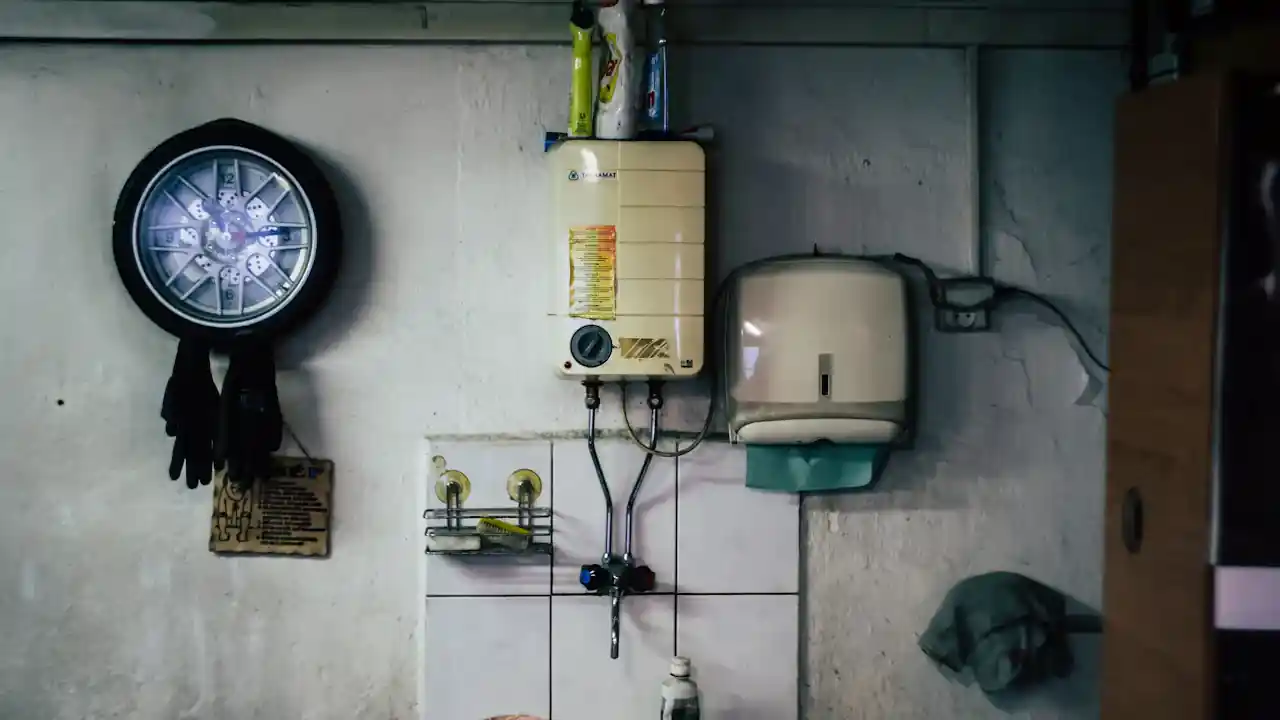
Can a tankless water heater leak?
Yes. A tankless water heater leaking usually comes from the inlet or outlet fittings, the isolation service valves, the pressure relief valve, the condensate line, or a heat exchanger damaged by mineral scale. Tankless water heater leak repair often involves descaling and new seals rather than replacing the whole unit. Scale build-up is a leading cause of tankless water heater leak repair calls.
A tankless heater heats water only when a hot tap opens. Cold water flows through a compact heat exchanger, a burner or electric elements heat it on the way through, and hot water leaves through the outlet. With no storage tank, there is no large volume of water to flood a room, but there is still full house pressure on every connection, and water moving through very narrow passages. Tankless water heater leak repair often includes descaling the heat exchanger.
That narrow path is the weak point in hard water. Minerals drop out of heated water and coat the inside of the heat exchanger. Scale reduces flow, makes the unit overheat and, over time, can damage the exchanger itself. In much of Southern California, descaling is routine maintenance rather than an optional extra. Note any error code before you book tankless water heater leak repair.
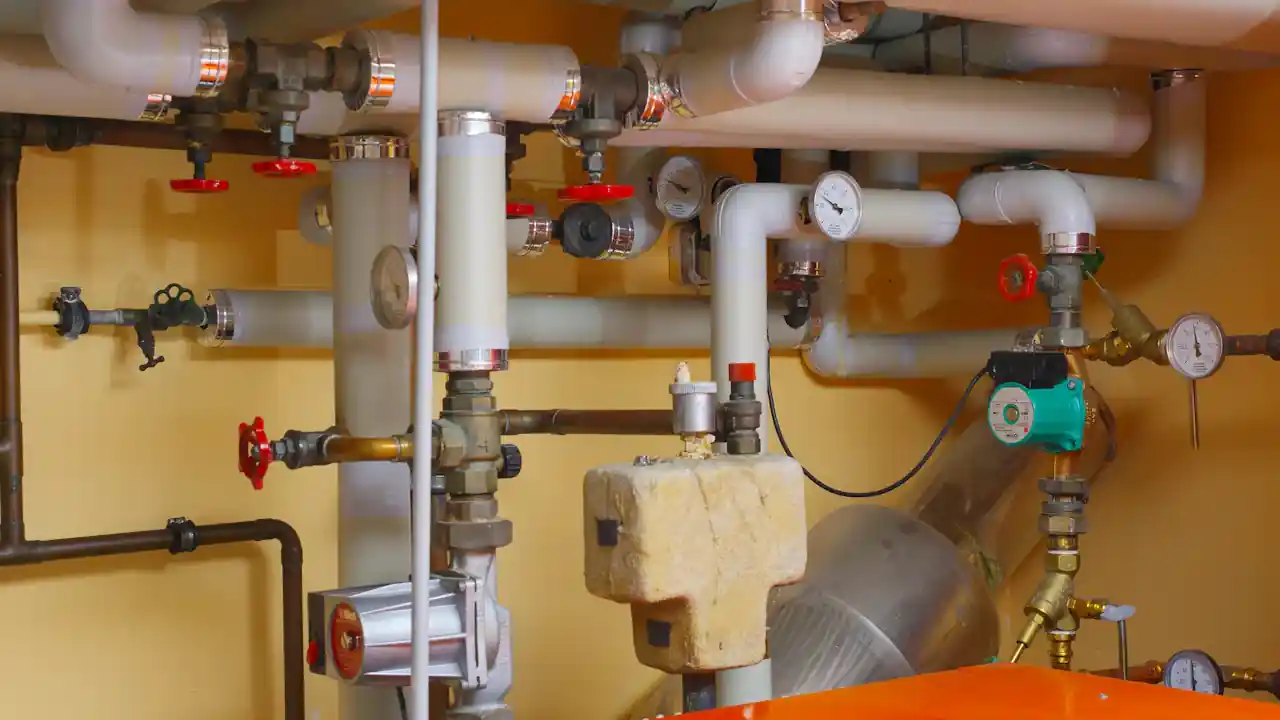
Is the drip normal? Condensate versus a real leak
High-efficiency condensing tankless units cool their exhaust so much that water vapor condenses inside the unit. That water is acidic and is carried away by a small condensate drain line, often through a neutralizer, to a drain or outside. A steady trickle from that line while the unit runs is how it is supposed to work. Tankless water heater leak repair needs power turned off before inspection.
What is not normal: Isolation valves make tankless water heater leak repair quicker and cleaner.
- Water dripping from the bottom of the cabinet rather than the drain line.
- Drops on the cold inlet, hot outlet or gas connection under the unit.
- Water from the pressure relief valve outlet.
- A wet wall behind the unit, or water inside the cabinet near the electronics.
- A condensate line that is disconnected, cracked or blocked and overflowing.
Where tankless water heaters usually leak
Inlet and outlet fittings
The cold inlet and hot outlet connect under the unit, often through an isolation valve kit. Threads and gaskets loosen with heating and cooling, and corrosion can form where metals meet. A clogged condensate line can look like it needs tankless water heater leak repair.
Isolation (service) valves
Most installs include a pair of valves with small service ports used for descaling. Their stems, caps and seals wear out, and they are a common source of drips. Leaking valves are replaced with shut-off valve replacement. Tankless water heater leak repair is often cheaper than replacing the unit.
Pressure relief valve
Tankless units also have a relief valve. It can drip if house pressure is high or if the valve is fouled. Water pressure testing shows whether pressure is the cause. Ask whether parts are in stock when you arrange tankless water heater leak repair.
Heat exchanger
Scale buildup causes hot spots that stress the exchanger. Combined with acidic condensate in some designs, that can lead to pinholes or cracks. Water inside the cabinet with dry external fittings often points here. Yearly descaling reduces the need for tankless water heater leak repair.
Internal seals and filter screen
O-rings at internal connections and the inlet filter screen cap can weep after years of use or after a descaling job that was not resealed properly. Tankless water heater leak repair may involve a new pressure relief valve.
8 warning signs your tankless unit needs attention
- Water inside the cabinet or dripping from the bottom.
- Drips at the service valves or connections below the unit.
- An error code for overheating, flow or detected water.
- Hot water that fluctuates or turns cold mid-shower.
- Reduced hot water flow compared with before.
- White crust around fittings or valve caps.
- An overflowing or disconnected condensate line.
- No descaling in the last year or longer.
Safe checks before you call
- Note any error code on the display and the model number on the label.
- Close the cold-water isolation valve under the unit.
- Switch the unit off at its power switch or breaker. On gas units, close the gas valve at the unit.
- Check where the water is: the condensate line, the fittings, or the cabinet.
- Put a container under the drip and keep water away from nearby outlets.
WarningDo not remove the front cover of a gas or electric tankless unit to look inside. It exposes live electrical parts and gas components.
How a provider fixes a leaking tankless unit
- Read the unit. The provider checks error history, flow and gas or power supply.
- Isolate and inspect. Service valves are closed, the unit is depressurized and each connection, valve and seal is checked.
- Descale if needed. A small pump circulates descaling solution through the service ports for a set time, then the unit is flushed with clean water.
- Replace worn parts. Gaskets, service valves, the relief valve, the filter screen seal or the condensate line are renewed as needed.
- Restart and test. The unit is refilled, purged of air, fired and checked under full flow for leaks and stable temperature.
Pro tipAsk whether your service valves are working properly while the provider is there. Valves that will not close fully make every future descaling job harder.
If the heat exchanger itself is cracked, the provider will discuss whether a replacement exchanger or a new unit makes more sense. When a tankless unit is not worth repairing, water heater replacement options include another tankless or a conventional tank. A cracked heat exchanger is the costliest kind of tankless water heater leak repair.
What affects the cost of a tankless leak repair?
| Factor | Why it matters |
|---|---|
| Leak source | Fittings and valve seals are small jobs; a heat exchanger is a major part. |
| Descaling | Units with heavy scale need a full descale before parts are replaced. |
| Brand and parts | Some parts are model-specific and may need to be ordered. |
| Gas or electric | Gas units add combustion and venting checks; electric units add element checks. |
| Access | Units mounted high or outdoors may take more setup. |
See the leak repair cost guide for repair-versus-replace factors. Tankless water heater leak repair restores endless hot water once the leak is sealed.
When a tankless leak is urgent
Close the isolation valves and switch the unit off right away if water is inside the cabinet, if the unit shows a water-detected or overheating code, if water is reaching electrical outlets or walls, or if you smell gas. For a gas smell, leave the home and call SoCalGas or 911 first. Then call (562) 539-0506 and you can reach our La Mirada leak repair line for help with tankless and tank-style heaters.
Tankless water heater leak repair: frequently asked questions
Why is my tankless water heater leaking?
Common causes are loose or corroded inlet and outlet fittings, worn seals in the isolation (service) valves, a pressure relief valve opening, a blocked or disconnected condensate line, or a heat exchanger damaged by scale. Some condensing units also drip condensate normally.
Is water dripping from a tankless water heater normal?
On condensing tankless units, a small, steady drip from the condensate drain line is normal. Water from fittings, valves, the cabinet itself or the bottom of the unit is not normal and should be checked.
Can a tankless water heater leak be repaired?
Most can. Fittings, valve seals, relief valves and condensate lines are replaceable, and scale-related leaks often stop after descaling and resealing. A cracked or pinholed heat exchanger is the main repair that may make replacement the better choice.
How often should a tankless water heater be descaled?
In hard-water areas like much of Southern California, many manufacturers recommend descaling at least once a year, and more often in homes with very hard water or heavy use. Your unit's manual gives the maker's recommendation.
What does an error code on my tankless unit mean?
Codes vary by brand, but many units display codes for overheating, flow problems, ignition faults or detected water in the cabinet. Note the code and the model number before you call; it helps the provider bring the right parts.
Should I keep using my tankless heater while it leaks?
It is best to close the isolation valves and switch the unit off until it is checked, especially if water is inside the cabinet near the electronics or burner.