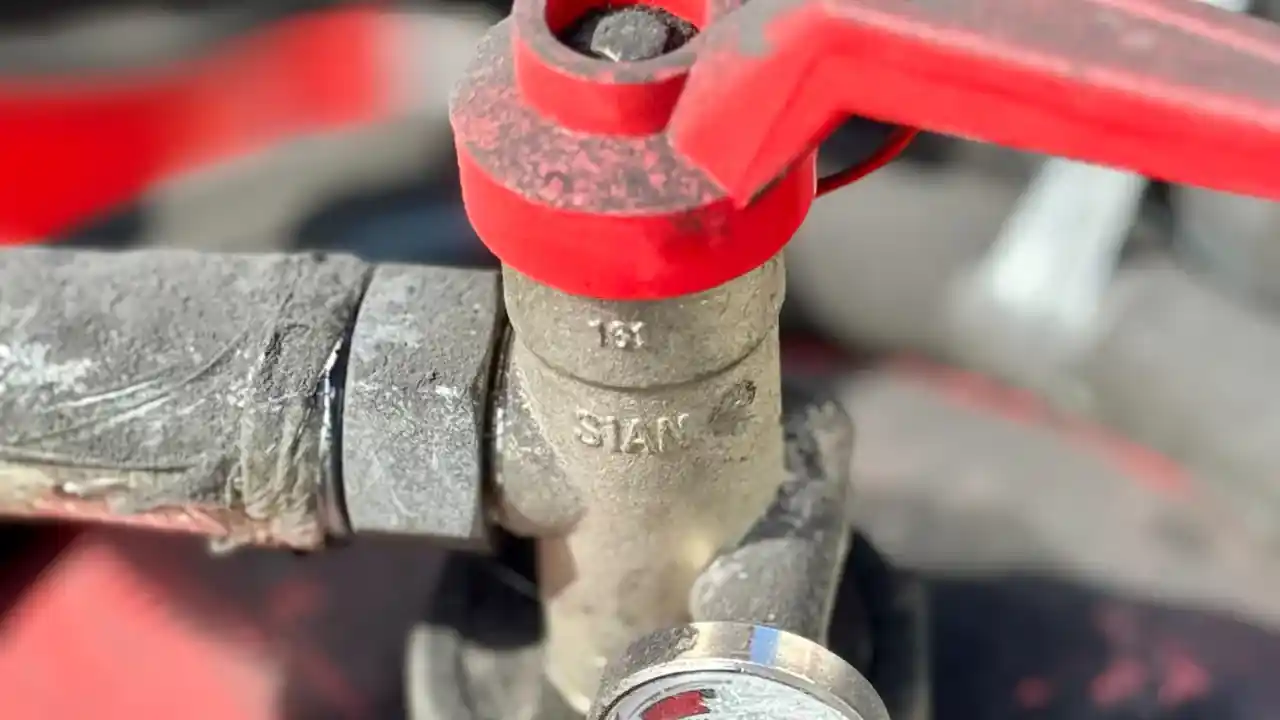
What does a water heater relief valve do?
The temperature and pressure (T&P) relief valve opens automatically when water inside the tank gets too hot or too pressurized, releasing water through the discharge pipe so the tank cannot over-pressurize. Residential valves are commonly rated to open around 150 psi or 210°F. Water heater relief valve replacement is needed when the valve leaks, sticks or corrodes. Check pressure and temperature before water heater relief valve replacement.
The valve sits near the top of the tank, usually on the side, with a pipe running down toward the floor. Inside is a spring-loaded seat and a temperature probe that reaches into the hottest water. Under normal conditions it stays shut. When it opens, it is protecting the tank from conditions that could split it. Water heater relief valve replacement alone will not fix high house pressure.
That is why a dripping relief valve deserves attention rather than a bucket. Either the valve is reacting correctly to real pressure or heat, which means something else needs fixing, or the valve has worn and is leaking when it should not. Both need a professional look. A valve that drips after every shower may need water heater relief valve replacement.
Why is water dripping from my hot water heater relief valve?
Thermal expansion
Water expands as it heats. If your home has a pressure regulator or a check valve on the main line, that extra volume cannot push back into the city supply, so pressure in the tank climbs every time the heater runs. A valve that drips after showers or laundry, then stops, is the classic sign. The fix is an expansion tank, not a new valve. Water heater relief valve replacement requires draining part of the tank.
High house water pressure
Street pressure can be high, and a failing pressure-reducing valve lets it through to the whole house. When static pressure sits close to the valve's rating, any extra rise opens it. A gauge on a hose bib during water pressure testing shows this quickly. Never cap the pipe while you wait for water heater relief valve replacement.
Thermostat set too high or overheating
A thermostat set very high, or a faulty thermostat or gas control, can push water temperature toward the valve's limit. Hot discharge, steam or very hot water at the taps points this way. Water heater relief valve replacement uses a valve rated for your tank.
A worn or fouled valve
Mineral scale from hard water and corrosion can stop the seat from closing fully. Old valves that have been tested and never reseated properly often drip constantly regardless of pressure. Many providers test the new valve after water heater relief valve replacement.
Relief valve leaking, or a leak somewhere else?
Water near the bottom of the heater is not always coming from the tank. A relief valve leaking at its threads can run down the jacket and pool at the base, and a discharge pipe that ends near the floor can leave a puddle that looks like a tank failure. Before anyone talks about water heater relief valve replacement or a new heater, the source has to be confirmed. Water heater relief valve replacement is often paired with an expansion tank.
Dry the area, then watch two spots: the end of the discharge pipe and the point where the valve screws into the tank. Water at the pipe outlet means the valve is opening or not sealing. Water around the threads means the connection is leaking. If both stay dry but the floor gets wet again, the water is coming from somewhere else, and the guide to a tank leaking from the base or professional leak detection is the next step. Corrosion on the valve body is a clear sign water heater relief valve replacement is due.
8 signs your relief valve needs attention
- A steady drip from the end of the discharge pipe.
- Dripping after hot water use, then stopping.
- Water or rust around the valve body where it threads into the tank.
- White crust or green corrosion on the valve or pipe.
- Hissing or rumbling near the valve while the heater runs.
- Hot water or steam discharging, not just drops.
- A capped, plugged or reduced discharge pipe.
- A valve that has never been inspected on a heater several years old.
Safe checks before you call
You can gather useful information without touching the valve. Water heater relief valve replacement is a quick job in most garages.
- Note when it drips: constantly, or only after hot water use.
- Check whether the discharge water is warm, hot or cold.
- Look at the thermostat or gas control setting.
- See whether your home has a pressure regulator on the main line near the hose bib.
- Put a bucket under the discharge pipe so the floor stays dry.
Never cap the discharge pipePlugging, capping or threading a fitting onto the end of the relief valve pipe removes the tank's overpressure protection. It is the one thing you should never do to stop a drip.
Avoid lifting the test lever on an old valve to see if it works. Scale on the seat can stop it from closing again, turning a drip into a steady flow. Ask about the discharge pipe route during water heater relief valve replacement.
Water heater relief valve replacement, step by step
- Diagnose first. The provider checks house pressure, thermostat setting and expansion control, so the new valve does not drip for the same reason.
- Shut down and drain. Water and energy are turned off, and the tank is drained below the valve opening.
- Remove the old valve and inspect the threads in the tank.
- Install a matching valve with the correct temperature and pressure rating for the heater, using thread sealant suited to potable water.
- Check the discharge pipe for size, slope and termination, correcting it if needed.
- Refill and test. The tank is refilled, air is purged and the heater runs a full cycle while the valve is watched for drips.
Pro tipIf the valve has been dripping for a long time, ask the provider to check the tank around the valve opening for corrosion. A corroded fitting can start leaking as soon as a new valve is threaded in.
What affects the cost of relief valve replacement?
| Factor | Why it matters |
|---|---|
| Root cause | A valve alone is a small job; adding an expansion tank or pressure regulator adds parts and labor. |
| Valve access | Tight closets and side-mounted valves near walls take longer. |
| Discharge pipe | Re-routing or replacing an incorrect pipe adds time. |
| Tank condition | Corroded threads may make replacement of the heater the better option. |
See the leak repair cost guide for how parts repairs compare with replacing the heater. Water heater relief valve replacement should be done by a professional.
When a relief valve problem is an emergency
Call right away if the valve is releasing a strong flow of hot water or steam, if it is hissing loudly, or if water at the taps is unusually hot. Those can mean the tank is overheating. Turn the gas control to OFF or switch off the breaker, keep people away from the discharge pipe, and follow the shutdown steps in the emergency water heater repair guide. For any water heater repair in La Mirada beyond the valve, start at water heater repair La Mirada. A properly working valve after water heater relief valve replacement protects the whole home.
Water heater relief valve replacement: frequently asked questions
Why is water dripping from my hot water heater relief valve?
Usually because pressure or temperature inside the tank is reaching the valve's opening point, most often from thermal expansion or high house water pressure. A worn valve that no longer seats properly can also drip. A pressure test tells the two apart.
Is a dripping relief valve dangerous?
The drip itself is not dangerous, but it is a warning. Either the tank is reaching unsafe pressure or temperature, or the safety valve is failing. Never cap or plug the discharge pipe, and have the cause found.
Can I replace a water heater relief valve myself?
It involves draining part of the tank, working with hot water and threading a safety device into a pressurized vessel. Mistakes can leave a heater without working overpressure protection, so it is a job best left to a plumber.
How often should a T&P valve be replaced?
Many manufacturers suggest inspecting it regularly and replacing it every few years or whenever it drips, sticks or shows corrosion. Mineral buildup from hard water can stop an old valve from opening or closing properly.
Will replacing the valve stop the dripping?
Only if the old valve was the problem. If thermal expansion or high water pressure is opening it, a new valve will drip too. That is why a good provider checks pressure before swapping the valve.
Where should the relief valve discharge pipe go?
It should run full size, without valves or caps, to an approved location such as near the floor, a drain or outdoors, so hot water is directed safely when the valve opens. A provider can check that yours is correct.