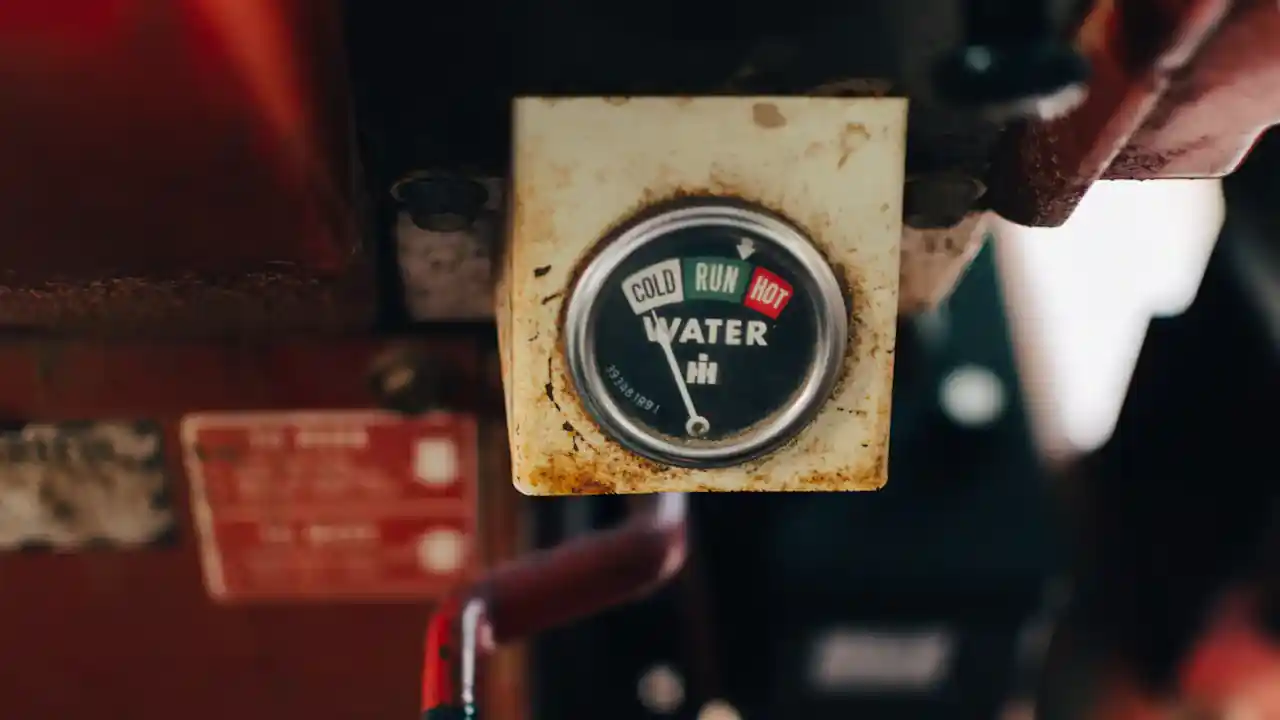
What is a water heater pressure test?
A water heater pressure test measures the water pressure in your plumbing, both at rest and as the heater runs, to see whether it is high enough to cause leaks. High static pressure or pressure spikes from thermal expansion are common hidden causes of dripping relief valves and failing connectors. Water heater pressure testing uses a simple gauge on a hose bib or drain valve. A dripping relief valve is a common reason to book water heater pressure testing.
Your water heater is built to hold pressure safely, but every part of it, from the tank seams to the rubber washers in the connectors, has limits. When house pressure sits high all the time, or jumps each time the heater fires, those parts wear out faster. The visible symptom might be a dripping relief valve or a connector that bursts, but the underlying cause is pressure. Water heater pressure testing also reveals a failing pressure regulator.
Testing is quick and inexpensive compared with replacing parts over and over. It also explains problems around the house that seem unrelated: running toilets, banging pipes, or faucets that spit when opened. Water heater pressure testing should be done before a new relief valve is fitted.
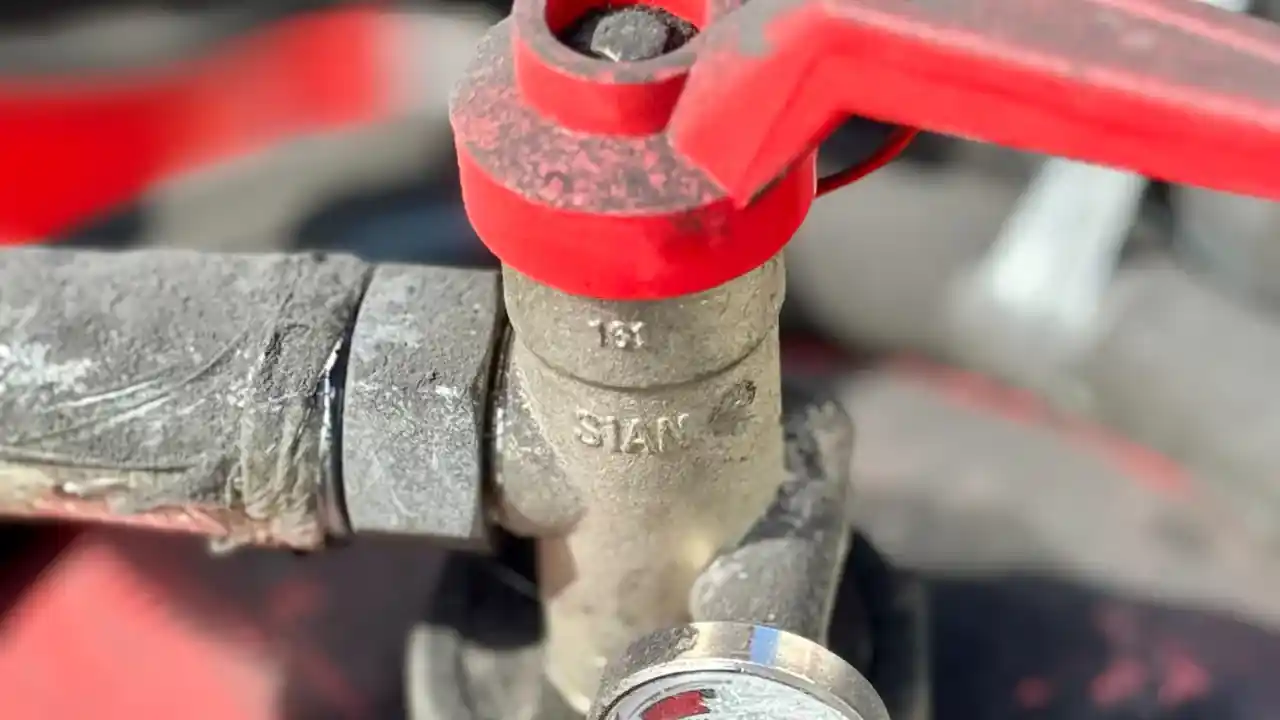
What causes high water pressure at the water heater?
High street pressure
Water utilities supply water at whatever pressure the local system needs, which can be higher than household plumbing should see. A pressure-reducing valve (PRV) near the main shut-off brings it down. Banging pipes are another sign that water heater pressure testing is due.
A failed or misadjusted PRV
PRVs wear out. When the internal diaphragm or seat fails, full street pressure can reach the house. Some PRVs are simply set too high. Water heater pressure testing takes only a short time during a visit.
Thermal expansion
A PRV or check valve stops water from flowing back to the street. As the heater warms a full tank, the expanding water raises pressure in the whole house until a fixture is opened or the relief valve releases it. An expansion tank gives that water somewhere to go. Thermal expansion problems often show up during water heater pressure testing.
A failed expansion tank
Expansion tanks have an air charge behind a bladder. When the bladder fails or the charge is lost, the tank fills with water and stops doing its job, even though it is still there. Water heater pressure testing helps size an expansion tank correctly.
8 signs your water pressure needs testing
- The T&P relief valve drips after hot water use.
- A connector has burst or bulged.
- Pipes bang when taps close quickly.
- Toilets run or refill on their own.
- Faucets spray hard or spit when opened.
- Repeated leaks at different fittings.
- An expansion tank that is full or sounds solid when tapped.
- A PRV older than the water heater.
How a water heater pressure test is done
- Static reading. With no water running anywhere, a gauge on a hose bib or the drain valve shows resting pressure.
- Thermal expansion reading. The heater is allowed to run while the gauge's maximum needle records how high pressure climbs.
- PRV check. If static pressure is high, the pressure-reducing valve is inspected and adjusted or replaced.
- Expansion tank check. The tank's air charge is tested and the bladder checked for failure.
- Relief valve check. The T&P valve is inspected for wear once pressure is under control.
Pro tipAn inexpensive hose-bib gauge from a hardware store gives you a quick static reading at home. Check it in the early morning and late evening, when demand is low and pressure is usually highest.
Simple checks before you call
- Notice when the relief valve drips: constant, or only after hot water use.
- Find your PRV, usually a bell-shaped valve near where the main line enters the house.
- Look for an expansion tank, a small tank near the water heater.
- Tap the expansion tank: a hollow sound at the top is good; a solid sound throughout may mean it is waterlogged.
WarningDo not adjust a PRV or bleed an expansion tank without knowing the correct settings. Over-tightening a PRV or changing the air charge incorrectly can make pressure problems worse.
What happens after a high reading
Depending on the result, the provider may recommend one or more of these: Repeated connector failures are a good reason for water heater pressure testing.
- Adjusting or replacing the PRV to bring static pressure into a safe range.
- Installing or replacing an expansion tank sized for the water heater, with the air charge set to match house pressure.
- Replacing a worn relief valve once pressure is corrected, so the new valve seals properly.
- Replacing stressed connectors that have bulged or started to seep, using new supply lines.
For tankless units, high pressure can also cause relief valve and fitting leaks; see tankless leak repair. Water heater pressure testing is a low-cost check with useful answers.
What affects the cost of pressure testing and fixes?
| Factor | Why it matters |
|---|---|
| Test only | A pressure check alone is usually a short part of a service visit. |
| PRV work | Adjustment is quick; replacement of a PRV adds parts and labor. |
| Expansion tank | Installing a new tank adds parts, mounting and piping. |
| Follow-on repairs | Relief valve or connector replacement after pressure is fixed. |
See the leak repair cost guide for related factors. Results from water heater pressure testing guide the next repair step.
Why older homes benefit from pressure testing
Much of La Mirada's housing was built in the late 1950s and 1960s. Many of those homes have had pressure-reducing valves added or replaced over the years, and some still rely on very old ones. PRVs wear out gradually, so pressure can creep up for months before anything obvious happens. Ask for the reading in psi after water heater pressure testing.
The water heater is often the first place that creeping pressure shows up, because the relief valve is designed to react to it. A relief valve that starts dripping, connectors that need replacing more often than they should, or a toilet that keeps running can all be early signs. A simple gauge reading tells you whether the cause is a worn PRV, missing expansion control, or both. Water heater pressure testing protects valves, connectors and the tank itself.
Fixing pressure at the source protects more than the heater. Faucets, dishwashers, washing machines and toilets all last longer when house pressure stays in a sensible range. Recheck the gauge after any fix that follows water heater pressure testing.
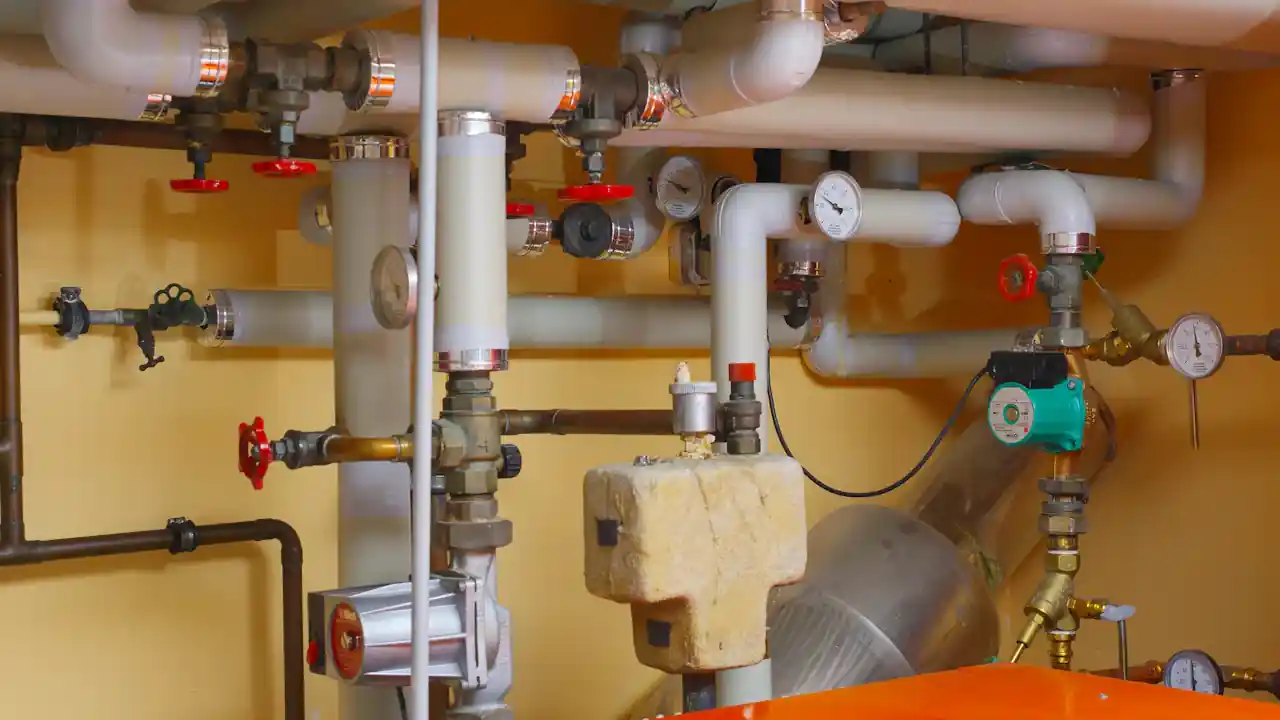
When a pressure problem becomes an emergency
A burst connector or a relief valve releasing a strong flow of hot water needs immediate action. Close the cold-water valve above the heater, or the main water valve if needed, turn off gas or power, and call (562) 539-0506. The emergency repair guide covers the steps. Water heater pressure testing is quick, simple and non-invasive.
Water heater pressure testing: frequently asked questions
What water pressure is too high for a water heater?
California's plumbing code generally calls for a pressure-reducing valve when static pressure is above 80 psi. Pressure near or above that level, or pressure that spikes as the heater runs, stresses the tank and valves.
Can high water pressure cause a water heater to leak?
Yes. High pressure strains fittings and seals, makes the T&P relief valve open or drip, and adds stress to the tank every heating cycle, which can shorten its life.
How is water pressure tested at home?
A gauge is threaded onto a hose bib or the water heater drain valve with no water running. It shows static pressure, and a gauge with a maximum-reading needle can show spikes that happen while the heater runs.
What is thermal expansion?
Water expands as it heats. In a closed plumbing system with a pressure regulator or check valve, that extra volume has nowhere to go, so pressure rises. An expansion tank absorbs it.
Do I need a new pressure-reducing valve?
If static pressure is high even though you have a pressure-reducing valve, it may have failed or need adjustment. A pressure test is how that is confirmed.
Is a pressure test worth it if nothing is leaking?
It can be, especially if you have had repeat relief valve drips, banging pipes or burst connectors. Catching high pressure early protects the heater and other fixtures.
Where is the pressure-reducing valve in my house?
It is usually near where the main water line enters the home, often close to the main shut-off valve or the front hose bib. It is typically bell-shaped with an adjustment screw on top.
Should I test pressure after replacing my water heater?
It is a good idea. A new heater is still affected by high pressure and thermal expansion, and testing confirms the expansion tank and PRV are doing their job.